
september 2022


By Maria Henriquez, Associate Editor
From businesses to schools and communities, how are organizations around the globe deploying security cameras in a cloud-based video management system (VMS)?
In its annual report on security cameras, Eagle Eye Networks (EEN) aggregated data from a sample of 200,000 security cameras worldwide over the past six years from more than 1,000 organizations in several different markets, including retail, restaurants, warehouses, commercial enterprises, multi-family residence, healthcare, hospitality, logistics, K-12 schools and cities.
The report reveals security trends and insights as to how organizations decide on the number and locations of their cameras to improve safety and security operations.
Video Recording Location
Sixty percent of cameras are used for cloud-only video recording, while 40% combine a mix of cloud and on-premises recording. There was an increase in the number of larger enterprises moving to cloud video surveillance in 2021; the higher number of security cameras in each building for larger enterprises requires more onsite storage due to bandwidth limitations.
The shift resulted in a slight increase in the percentage of organizations deploying mixed-cloud plus on-premises video recording compared with last year’s data. The percentage of cameras with combined-cloud and on-premises recording (versus cloud-only recording) increased between 2016 and 2019 and has been fairly stable over the past three years.
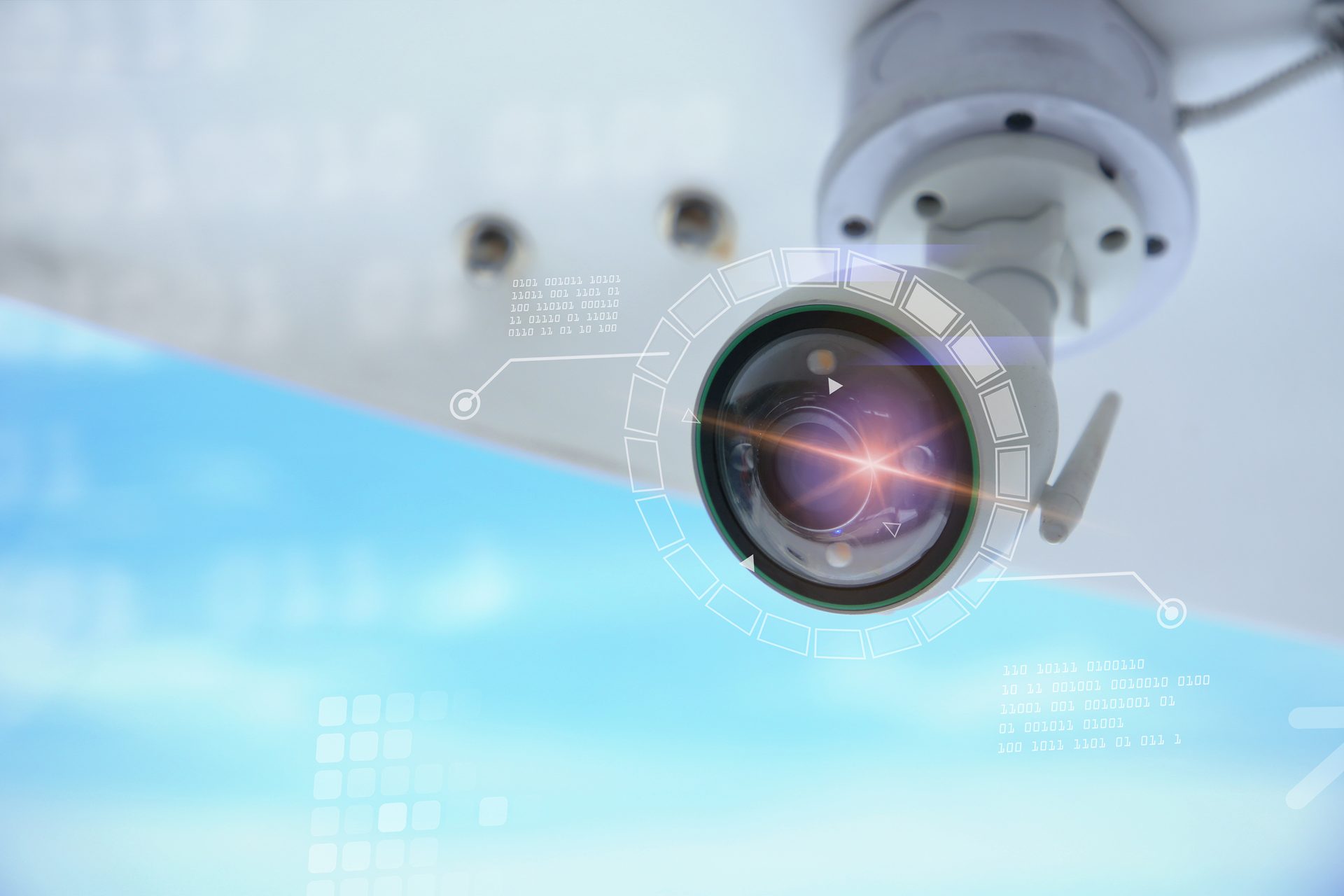
Video Surveillance Cameras Optimize Security Operations
Jay_Zynism / iStock / Getty Images Plus via Getty Images
advertisement
advertisement
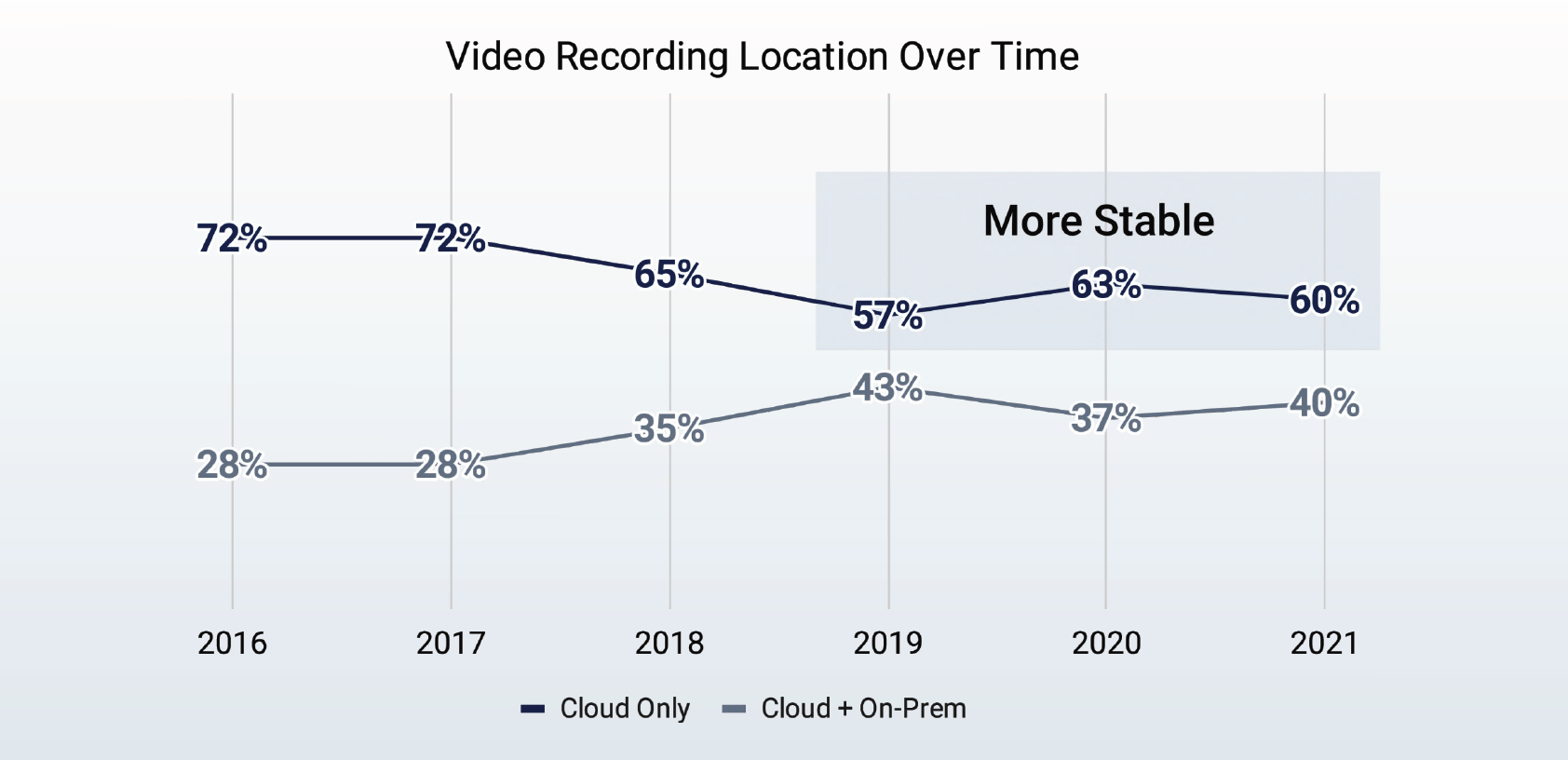
Image courtesy of EEN
1. Cloud Recording Retention
The average cloud recording retention in 2021 was 29 days, only slightly higher than the 28.2 day cloud retention from last year’s report. The most common cloud retention was 30 days. Moreover, 43% of respondents said their cloud recording was 30 days, 31% said 1 to 7 days, 15% said 14 days, 10% said 60 to 180 days, and 1% said 1 to 7 years.
Although there is variation, for 180 days retention and above, highly represented sectors include medical, educational institutions, financial, government, hospitality and multi-unit residences. More regulated industries, such as banking, law enforcement and the cannabis industry, generally require longer retention, with some contract recordings requiring a full seven years.
2. On-Premises Recording Retention
The average on-premises recording retention was stable at 33 days. The dominant retention choice was 30 to 60 days for 78% of respondents. In addition, 20% said their choice for on-premises recording retention was 90 to 180 days; 1% said 7 to 14 days and an additional 1% said 365 to 480 days.
Audio Recording
The percentage of audio recording-enabled security cameras has doubled over the past five years, with 7% of cameras installed in 2021 using audio recording — the same percentage of cameras installed in 2020.
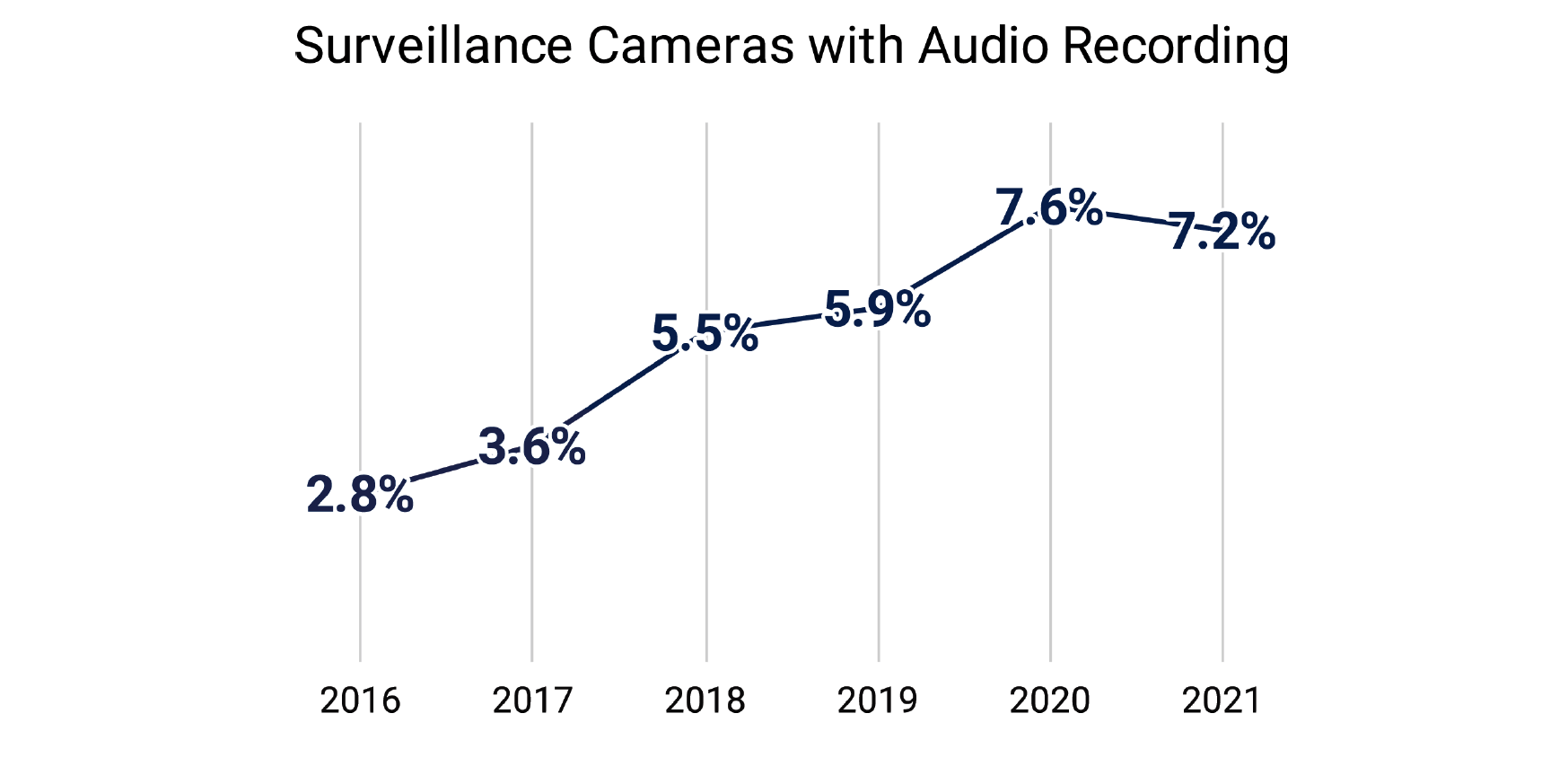
Image courtesy of EEN
Top Security Analytics
Security camera video analytics track and provide real-time alerts to particular events. They can also be used to search forensically for events that have already occurred. The report examined the four most common physical security analytics to determine their relative level of use.
The four most commonly used security analytics, according to respondents are:
- Intrusion: Flags when someone enters a designated area; typically associated with areas that are considered off limits.
- Crossing: Identifies whether a person or vehicle crosses a marked line; commonly tied to people entering a store and can also be used for an unsafe area.
- Counting: Counts the number of people in an area; typically used to monitor service quality or for safety reasons.
- Loitering: Determines if an individual or group stays beyond a specified time in a particular area and can indicate suspicious behavior.
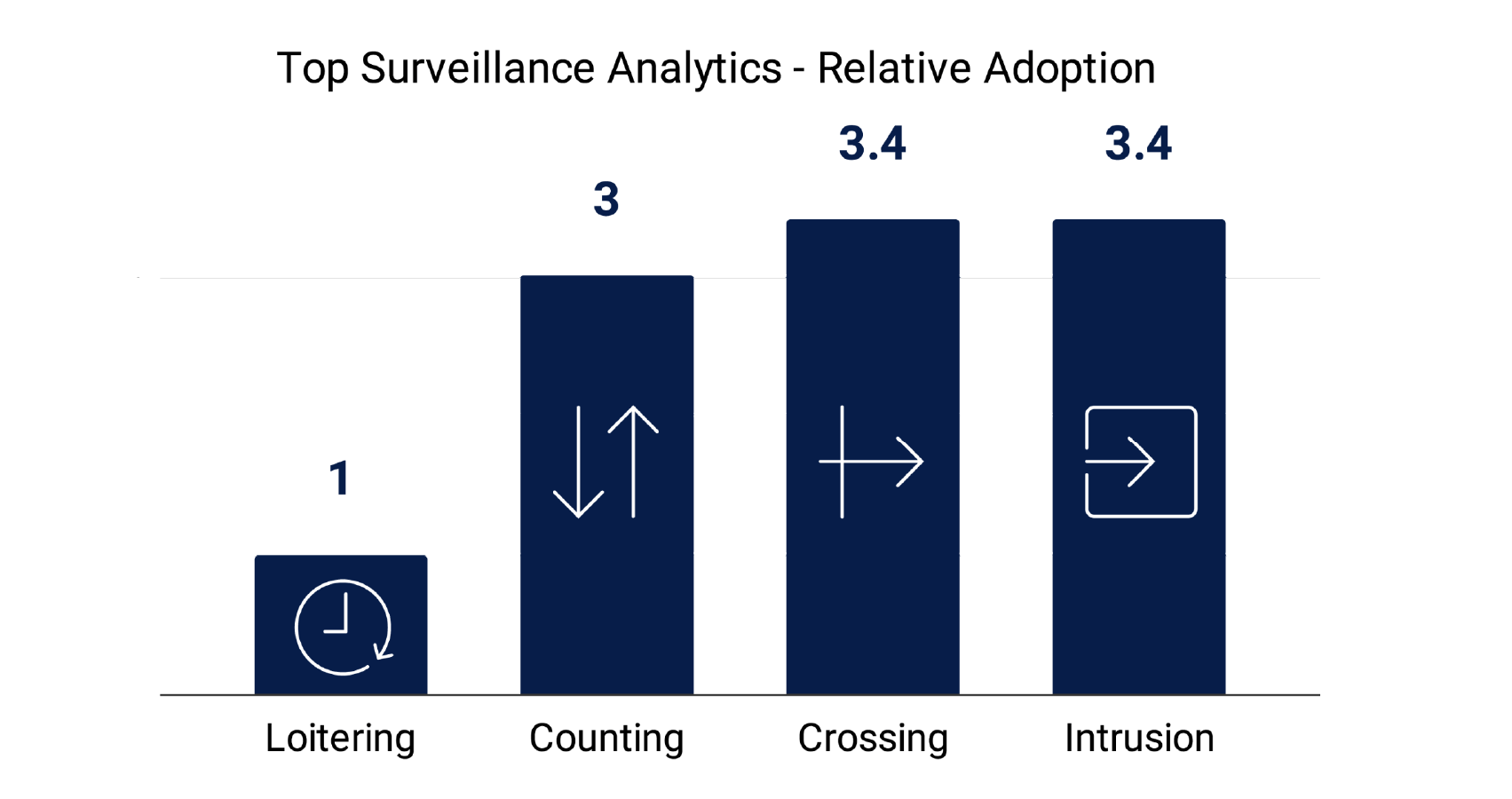
Image courtesy of EEN
This year, crossing analytics caught up with intrusion for a two-way tie for the most deployed analytics, closely followed by counting analytics. Loitering remained the least-used application, with deployment levels one-third or less compared to the others.
The more recent artificial intelligence-based analytics available in the market, including license plate recognition and traffic monitoring, are still in earlier stages of adoption and did not show up in this study with a significant level of response.
The report can be helpful for security leaders and their organizations looking for insights on moving to cloud-based video surveillance camera systems.
For the full report, visit www.een.com.
Each year, natural disasters such as hurricanes and wildfires affect hundreds of communities and people worldwide. According to the National Center for Environmental Information, natural disasters cost the United States $145 billion in 2021, with hurricanes, wildfires, droughts and deep freezes making headlines. The three costliest disasters in 2021 were category four Hurricane Ida in August ($75 billion), February cold temperatures that caused power outages in Texas and the central U.S. ($24 billion) and a series of wildfires in California and other western states ($10.6 billion).
Scientists and policymakers have warned that climate change could make natural disasters more frequent and severe.
As of July 2022, there have been nine weather or climate disaster events with losses exceeding $1 billion each — and hurricane season has yet to be accounted for.

Improving National Disaster Preparedness and Resilience
oobqoo/ iStock / Getty Images Plus via Getty Images
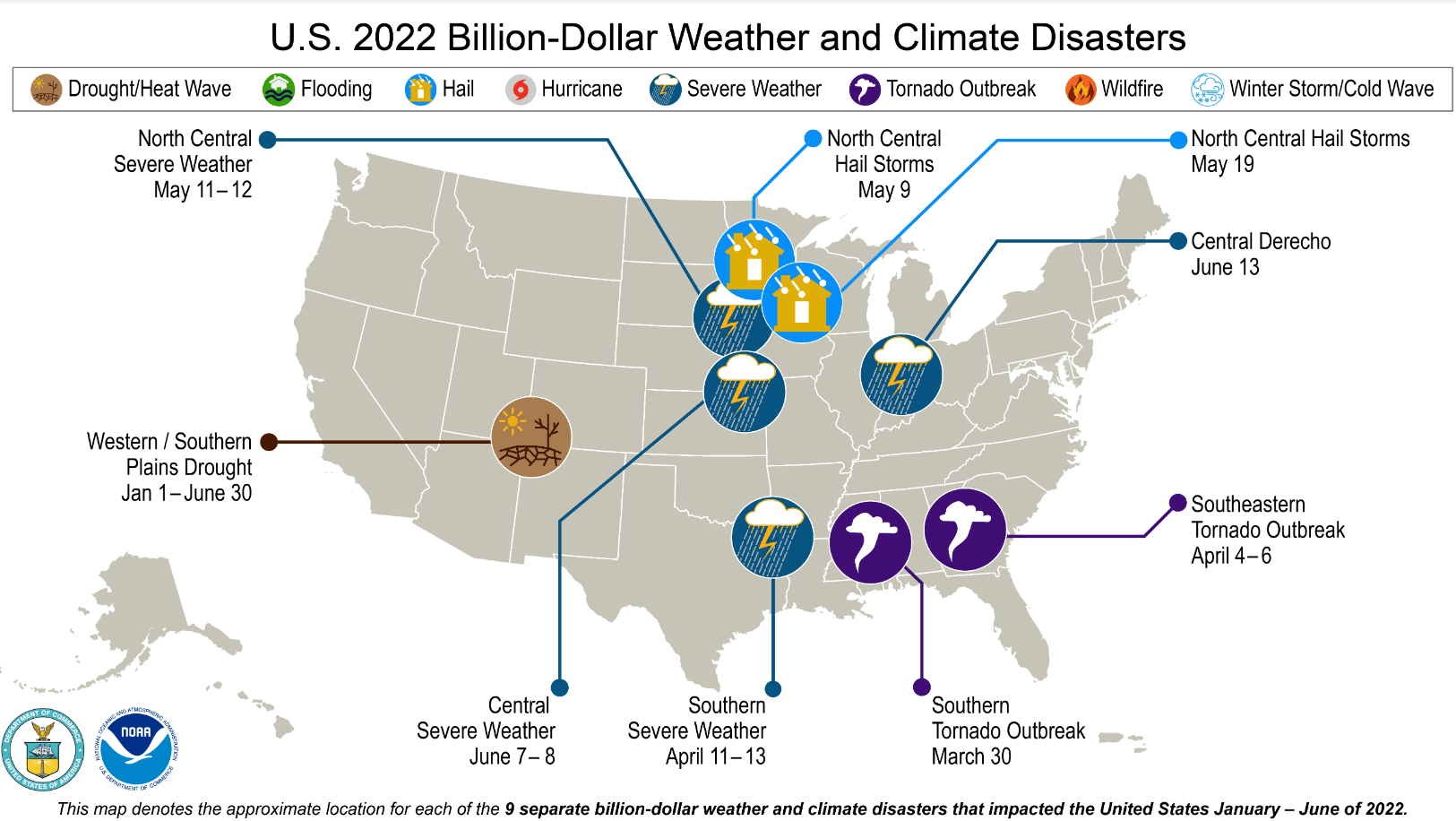
Image courtesy of NOAA
Investments in disaster resilience are key to reducing the overall impact of future disasters and costs. The U.S. Government Accountability Office (GAO) recently examined federal efforts to strengthen national preparedness and resilience and identified opportunities for improvements in several key areas:
There are emergency management capability gaps in disaster recovery and mitigation.
State and local officials face challenges with the Federal Emergency Management Agency’s (FEMA) hazard mitigation grant programs, which could discourage investment in projects that would enhance disaster resilience.
GAO found that a disaster resilience framework can serve as a guide to facilitate and promote resilience to natural disasters and the effects of climate change. The framework is organized around three broad overlapping principles — information, integration and incentives. Users of the Disaster Resilience Framework can consider its principles to help Congress and federal agencies improve federal climate resilience planning and implementation, as well as analyze and identify opportunities to address gaps in federal emergency preparedness efforts.
The framework provides a series of questions for those who provide oversight or management of federal efforts to consider when analyzing opportunities to enhance their contribution to national disaster resilience.
For the GAO report, visit www.gao.gov.
Humanoid security robots are here. While a variety of utility patrol robots have been used in the workplace for some time, it is the humanoid-type form that could provide a leap in security robots’ usefulness and workplace acceptance, according to an ADT Commercial white paper, “Humanoid Robots and Commercial Security.”
Artificial intelligence (AI)-enabled humanoid robots can help enhance or supplement security guarding programs in commercial environments by providing the following value:
- Robots can navigate the environment and independently perform programmed tasks with minimal human oversight, including conducting routine patrols and clearing safety hazards.
- Where a person may grow tired or less attentive during their guarding shift, humanoid robots are constantly alert, helping to minimize the potential for human error.
- Robots can potentially reduce human exposure to life-threatening risks or hazards.
- Humanoid robots can help address labor costs and shortages associated with the guarding market.
- Such technology is designed to recognize and interact with people in an authorized environment, including communicating wayfinding requests or connecting with a standby human operator to ensure accuracy and responsiveness when an incident occurs.

5 Benefits of Humanoid Security Robots in Guarding
iLexx / iStock / Getty Images Plus via Getty Images

september 2022 / SECURITYMAGAZINE.COM