
november 2025


Leadership & Management
By Michael Gips
Contributing Writer

Mind the GAP
Six principles every security leader should remember when plans derail.
JJ Gouin / iStock / Getty Images Plus via Getty Images
A decade ago it was whitewater rafting, ropes courses, and ziplines. This time, to mark a milestone birthday, three longtime friends — Ben, Brice, and I — set our sights on the Great Allegheny Passage (GAP), 150 miles of crushed-limestone rail trail threading the Appalachians from Cumberland, Maryland, to Pittsburgh. Ben (a college housemate), sidelined by bad discs, volunteered for logistics and to turn his 2020 Toyota Sienna into a makeshift SAG wagon. Brice (a friend since preschool) and I would ride, and all three of us would get what we convened over Labor Day weekend for: time to reconnect, relax, and inhale snacks like we were 16 again.
Ben had a garage full of bikes, pumps, inner tubes, patch kits, and assorted tools that we loaded into his SUV. We tossed in lots of water and carbohydrates. We had phones and chargers. We were prepared for anything.
Until we weren’t.
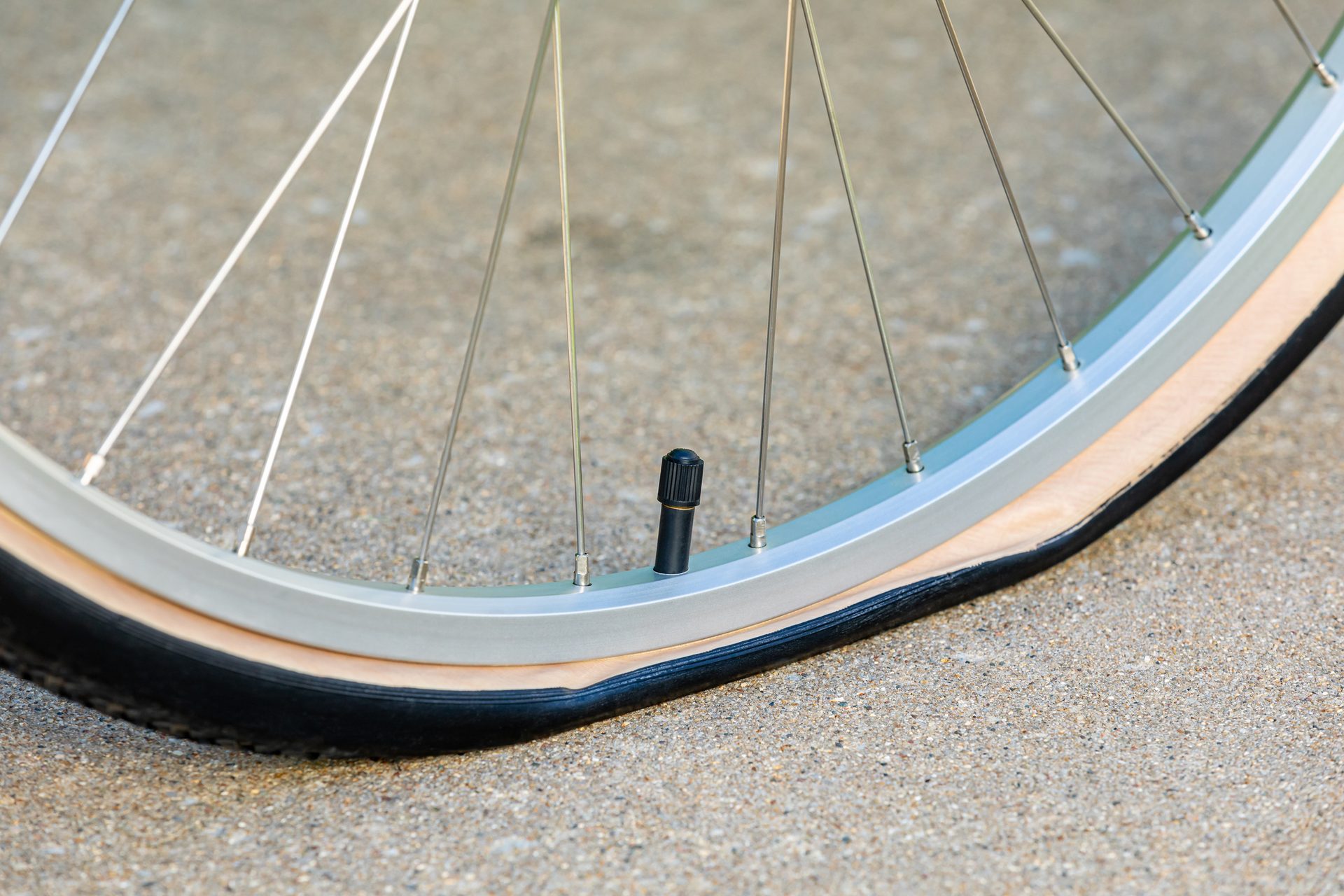
Near the Mason –Dixon line I heard an abrupt pop, then felt my front tire instantly go slack. The inner tube was so shredded the valve had sheared off. Cell service was patchy, online maps were sketchy, and the next trailhead was about 10 miles off, uphill over gravel. Was the Mason-Dixon line now a demilitarized zone with cell blackouts and intentionally vague GPS mapping?
We made two decisions quickly: conserve the bike and conserve our calm. To protect the rim, Brice and I alternated carrying the front end and rolling the bike on its back wheel, while the other commandeered the working bike. Notifying Ben of our predicament, we walked three miles to a gravel road and intuited our way toward a paved street. Meanwhile, Ben found a Walmart, bought a compatible tube, and found us as we dragged our bikes out of the backwoods. It wasn’t elegant, but it was deliberate. We managed the situation without compounding the damage and kept options open until we could restore capacity.
The next day the problem wasn’t mechanical; it was human. I reached the Confluence, Pennsylvania, trailhead about a mile before Brice. It wasn’t the usual scene of cyclists filling tires and chugging Gatorade, but rather kayakers unloading their gear for the Casselman River, two shuttered aquatic stores, and no cell service anywhere. Fifteen minutes passed, longer than it should have taken Brice to arrive. I asked around, and someone had seen a cyclist generally fitting Brice’s description walking his bike over a bridge.
Fearing he might be injured or broken down, I backtracked to the intersection in blink-and-you-miss-it Harnedsville where I’d left him. Nobody. I returned to Confluence, asked around, but got nowhere. There was still no cell signal.
I replayed the day’s plan: Brice was undecided about riding the last 11 miles to Ohiopyle; I was committed. If we couldn’t sync in Confluence, the next unambiguous rendezvous was Ohiopyle. I sped that way, stopping once or twice to ask if anyone had cell-service bars. Nope. At the Ohiopyle trailhead, Brice was waiting.
In Confluence, he had followed other riders to what looked like the trailhead and linked up with Ben, where after some futile searching they decided to find me at the endpoint. When we located each other, no one was upset. We were relieved, though no one was ever truly worried. Then we loaded up on snacks and headed home.
None of this tale is epic. But these two ordinary incidents shine a headlight on key areas of security leadership.
1) Tune Up Your Preparation
Ben’s injury prevented riding, so he multiplied team capacity off the trail: tuning bikes, mapping supply points, driving the vehicle, and standing up logistics. We still had a failure. Preparation doesn’t guarantee the plan will survive contact. It lets you recover when it doesn’t. In security programs, the value of advance work isn’t that nothing goes wrong. It’s that when something does, you already know where to “buy the inner tube.”
Takeaway: On your next operation or event, designate a logistics lead who is not on the front line. Empower them to procure, reroute, and resupply independently.
2) Pump the Brakes on Degrading Your Assets
Personal health and safety always trump inanimate assets, but when well-being isn’t endangered, consider how much you should degrade your asset. We didn’t ride on a ruined tire and destroy a rim. We slowed down, carried and rolled the bike, and protected the critical asset. In the physical security world, you would drive on the car’s rims if it meant helping a principal escape an attack. But if the principal isn’t in peril and has adequate communication technology, waiting for a replacement vehicle is just fine.
Takeaway: In a crisis, consider functions you’ll throttle first, which assets you’ll protect at all costs, and how you’ll shift workload to preserve what’s most valuable.
3) Air Clear Expectations
Between Confluence and Ohiopyle, communications failed entirely. What kept us aligned was a shared endpoint. We had a specific destination that enabled decentralized decisions when comms went quiet. Ben and Brice made one set of choices, I made another, but we converged because the endpoint was unambiguous.
Takeaway: For every critical operation, state intent in one sentence, such as: “If we lose comms or the route is blocked, we will get the principal to the destination by shifting to Route B and putting the principal in the follow vehicle at Rally Point 2.” Hang decisions on that sentence.
4) Set Your PACE
Our action ladder was talk, text/call, ask cyclists, ask locals, and move to rendezvous. If that failed, we’d find wifi or landlines, with escalation up to contacting trail and/or emergency authorities. In security, leaders perseverate on the primary path and neglect the alternate, contingency, and emergency modes. When a network goes wonky, the plan shouldn’t.
Takeaway: Make a PACE (Primary/Alternative, Contingency/Emergency) card for your top risks. Make sure everyone knows which “Walmart” they’re driving to when Plan A fails.
5) Cycle Through OODA
No one blamed anyone for the flat, the overlooked spare innertube, the decision to bike ahead or fall behind, the missed rendezvous, or the confusion at the trailhead. We cycled quickly through the OODA loop, observe–orient–decide–act, without dramatizing the moment.
Takeaway: After your next near-miss, run a blameless review that focuses on signals, options, and choices, not culprits. You’ll speed up the next cycle when it matters.
6) Know Your Top Gear
I was prepared to wheel the disabled bike nine miles if necessary, and I had water, but pitch darkness was a hard stop. Leaders set thresholds, be they time, weather, staffing, or threat posture, that trigger a change of plan. The best teams know not just what they’re trying to achieve but also when they’ll pause, consolidate, or escalate.
The weekend’s lesson was that leadership looks boring up close: a friend who chooses to be the logistics tail so the team can have a day together; two colleagues who carry, walk, and wheel in good spirits instead of turning a bad situation into a catastrophe; three people who default to intent and trust when the bars vanish from the phone.
Security leaders keep mission rolling when the valve shears off, the trail is isolated, the map is unintelligible, and the sun is fading fast.
We’ll be sure to have a revised plan for our next gathering, be it skydiving, rock climbing, deep-sea diving, or maybe just a pizza tour of New Haven.